Nakfa Energy LLC | Houston | 2 April 2026
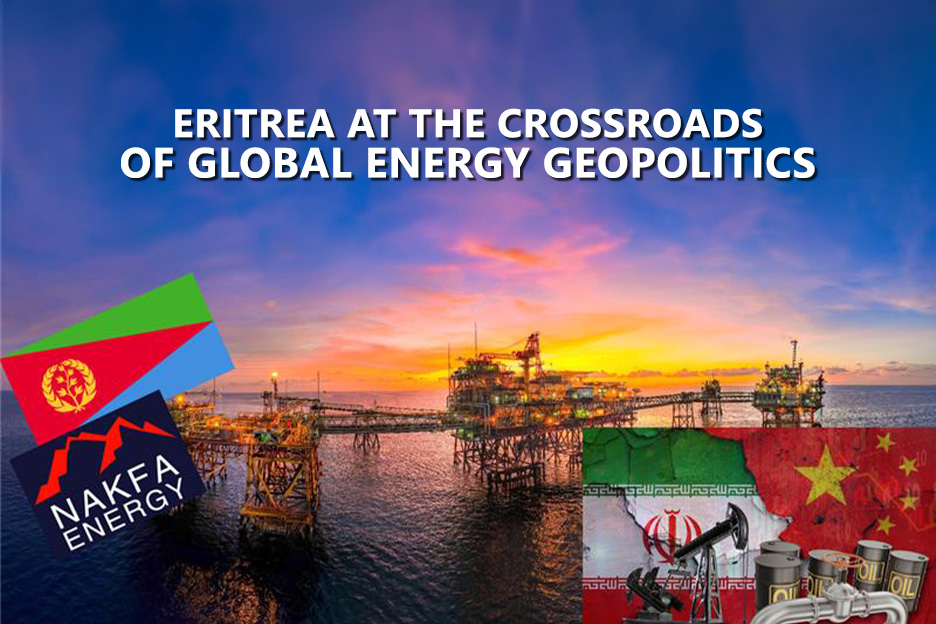
As global energy markets are reshaped by war, sanctions, supply-chain disruptions, and great-power competition, the strategic value of hydrocarbons has returned to the center of national policy. For Eritrea, this is not simply an external story. It is a question of national development. In a world searching for new and reliable sources of supply, Eritrea has a timely opportunity to assess its offshore hydrocarbon potential and strengthen its long-term path toward energy resilience, economic self-reliance, and strategic relevance.
“Eritrea has the opportunity to evaluate its hydrocarbon future not out of urgency, but out of foresight. In an increasingly unstable energy world, the option to become a producer is itself a strategic national advantage.”
— Alexander Tekie, Chief Executive Officer, Nakfa Energy
Eritrea stands at a defining moment—one shaped not only by domestic priorities, but by a rapidly changing global energy order. Recent developments involving Iran, Venezuela, and major global supply routes have reinforced a lesson that many nations already understand clearly: energy security is inseparable from national resilience.
For Eritrea, the issue is not whether global volatility matters. It already does. The question is whether the country should continue to absorb the consequences of external shocks, or whether it should deliberately build the foundations for future energy independence.
At Nakfa Energy, we believe responsible exploration should be viewed as a long-term national capability—grounded in science, discipline, and sovereign decision-making. This article is offered in that spirit: constructive, fact-based, and aligned with Eritrea’s long-term interests.
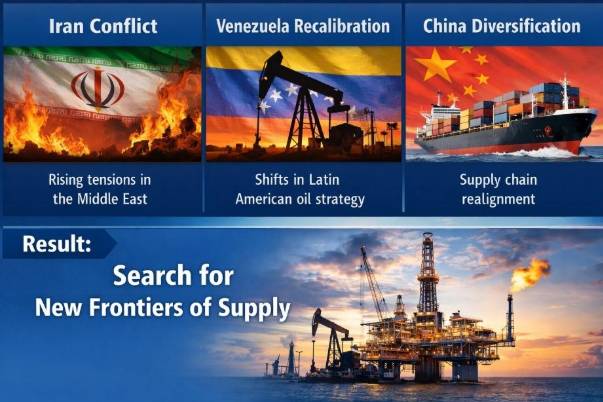
Global energy markets are undergoing structural realignment. Tensions affecting Iran and the Strait of Hormuz, renewed U.S. action involving Venezuela, and China’s evolving sourcing strategy all point to the same conclusion: the world is looking for new, reliable, and geopolitically stable sources of hydrocarbons.
For Eritrea, this creates an opening.
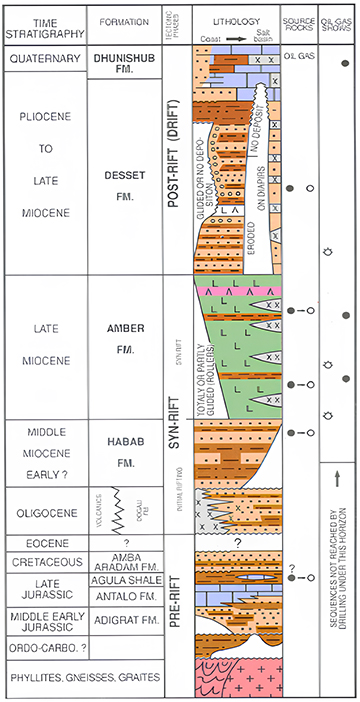
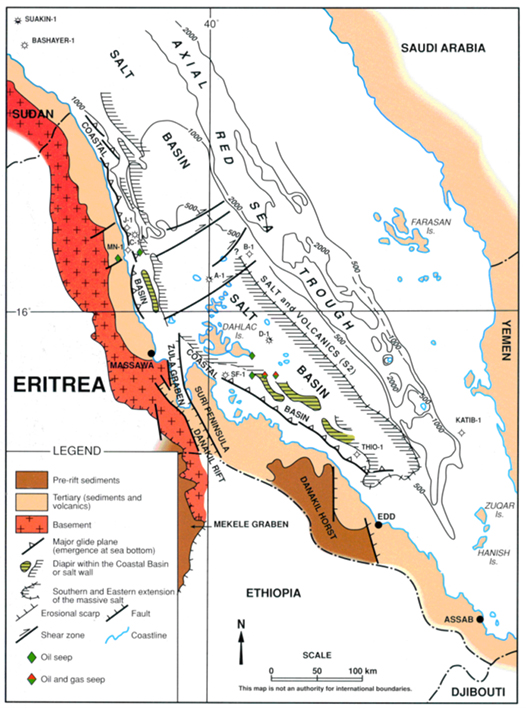
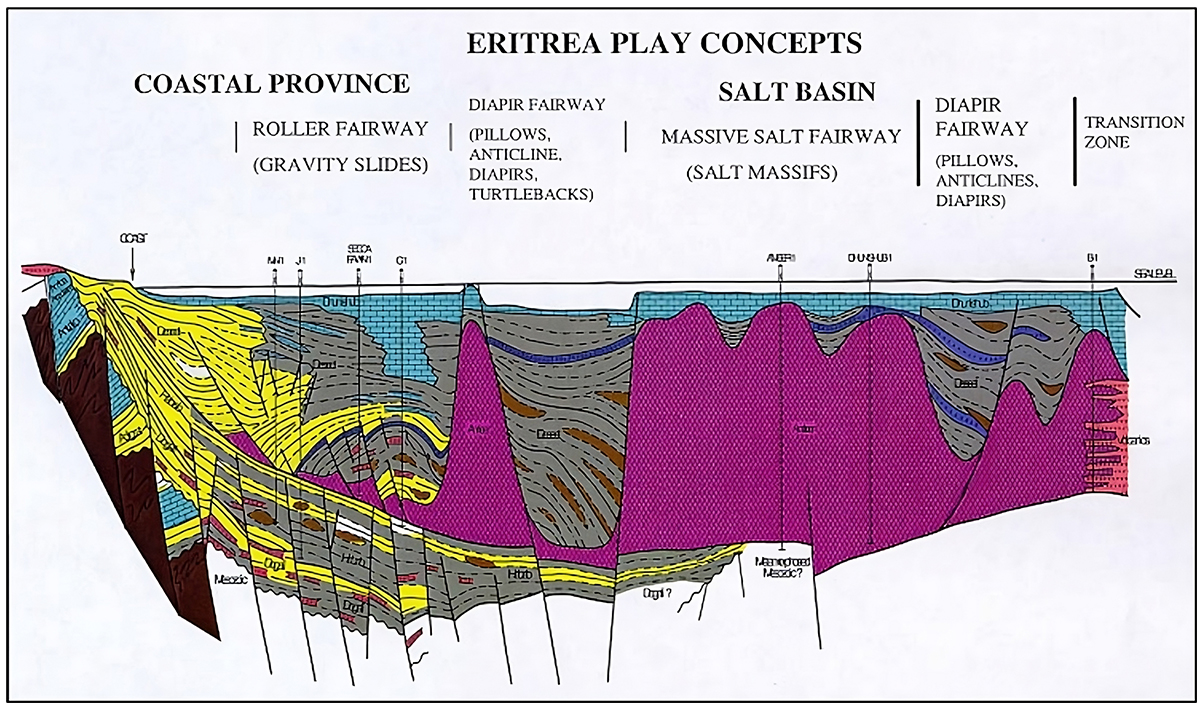
With offshore Red Sea potential, a strategic maritime position, and an economy exposed to imported fuel disruptions, Eritrea has reason to accelerate a disciplined hydrocarbon exploration program now—not as a short-term reaction, but as a strategic move toward national resilience, long-term optionality, and future producer status.
1. A Global Energy System Under Pressure
Global energy security has returned to the center of geopolitics.
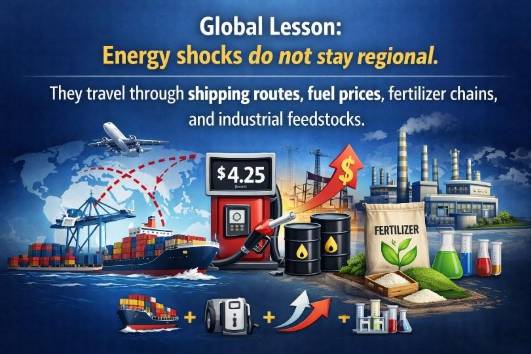
Conflict linked to Iran and instability around the Strait of Hormuz have reminded markets that energy disruption is no longer theoretical. The Strait remains one of the world’s most important chokepoints for crude oil, refined products, and associated petrochemical feedstocks. When disruption occurs there, the effects are felt far beyond the Gulf.
For fuel-importing nations, including those in Africa, the consequences are immediate: higher costs, supply uncertainty, freight pressure, and inflationary spillover. Eritrea is not insulated from these realities. What appears at first glance to be a distant geopolitical conflict can quickly become a domestic economic burden.
2. Why Global Hydrocarbon Disruption Matters Directly to Eritrea
For Eritrea, imported hydrocarbons and hydrocarbon-derived products support critical parts of the national economy. Its economy is directly exposed to global energy volatility.
Diesel and petroleum derivatives are essential for:
Hydrocarbons also matter beyond direct combustion.
Sulfur, largely derived from oil and gas refining, is central to producing sulfuric acid—a critical input in copper extraction and mineral processing. Natural gas is also the key upstream input for ammonia and urea, both essential to fertilizer production and agricultural systems, thus critical to food security.
In other words, as global disruptions intensify, Eritrea faces not only rising prices but potential supply constraints. The Iran-related tensions and Hormuz vulnerabilities illustrate that external shocks can directly affect domestic stability.
3. The Return of Energy Geopolitics: Iran, Venezuela, and Supply Realignment
While attention has focused on recent U.S. actions involving Iran and Venezuela, the larger story is global supply realignment:
These shifts are not isolated events. They reflect a deeper restructuring of how energy is secured, traded, and leveraged geopolitically.
This has major implications for frontier producers.
Hydrocarbons should not be understood merely as commercial commodities. In today’s world, they are strategic sovereign instruments.
For Eritrea, offshore hydrocarbons, if confirmed, should be viewed:
The case for exploration is not that Eritrea should move recklessly or react impulsively to global headlines. The case is that Eritrea should recognize the strategic value of understanding and positioning its offshore resource base now, while the global system is actively rewarding energy optionality.
5. From Consumer to Producer Nation: A Path Toward Self-Reliance
A country cannot fully achieve self-reliance if it remains structurally dependent on externally sourced strategic inputs.
This is not a criticism of policy. It is a fundamental economic principle.
Until Eritrea fully develops its natural resources—including oil and gas—for the benefit of its people, it remains exposed as a consumer in systems shaped by others.
Genuine self-reliance requires productive capacity. It requires ownership of strategic value chains. It requires reducing dependence where national resources may provide an alternative.
That is why hydrocarbon exploration matters beyond the petroleum sector itself.
It speaks to a broader national question: whether Eritrea should remain vulnerable to external energy shocks, or whether it should methodically build the option to power more of its own future.
6. Eritrea’s Strategic Relevance in China’s Energy Future
China remains one of the world’s most important long-term energy consumers. As global supply risk rises and sourcing becomes more politically contested, Beijing’s search for diversification becomes more important.
This creates a future-facing opportunity for countries that can emerge as credible suppliers.
Eritrea’s strategic location along Red Sea routes, combined with its offshore geological potential, gives it relevance well beyond its current production profile. If hydrocarbons are confirmed and developed responsibly, Eritrea could one day serve as part of a diversified energy supply architecture for Asian demand centers, including China.
This is not about choosing geopolitical camps. It is about recognizing that in a more fragmented energy order, future producers with geographic and strategic advantages will matter more.
Several factors make this a uniquely favorable moment for Eritrea:
Conflict and sanctions are reminding markets that concentrated supply chains carry risk.
Fuel, industrial inputs, and downstream economic activity all depend on global hydrocarbon systems.
Even before production, the act of assessing and de-risking a basin strengthens national strategic positioning.
Countries that organize early tend to capture stronger partnerships, better terms, and better sequencing.
A disciplined, Eritrean-led framework can attract capital without compromising national control.
Eritrea’s opportunity is defined by a convergence of factors:
However, geology alone is not sufficient.
“Geology has never built an oil industry—policy, fiscal discipline, and partnership structures do.”
A well-designed exploration framework—aligned with national priorities—will be key to unlocking this potential.
9. Conclusion: A Call to Action Built on Facts, Not Critique
This moment represents a crossroads for Eritrea.
The global energy order is in flux. The United States is recalibrating its role in Iran, Venezuela, and global energy markets. China is recalibrating its sourcing strategy. Producers, traders, and investors are reassessing risk across traditional supply regions.
For Eritrea, the implication is clear.
Exploration should be approached not merely as an economic possibility, but as a strategic national question tied to resilience, sovereignty, and future relevance. The case for moving now is not based on rhetoric. It is based on facts: external shocks already affect Eritrea; hydrocarbons remain foundational to the modern economy; and new frontiers of supply are becoming more important in a changing world.
The realities outlined in this article point to a window of opportunity that, if approached deliberately, could reshape Eritrea’s economic and strategic future.
Nakfa Energy stands ready and continues to support this journey, working in alignment with the Government of Eritrea to foster exploration programs that are disciplined, sovereign, and designed to unlock the full potential of Eritrea’s energy future.
Alexander Tekie is the CEO of Nakfa Energy.
Nakfa is an independent oil & gas company focused on the exploration and development of Eritrea’s hydrocarbon potential. It is committed to unlocking Eritrea’s immense untapped energy endowment.