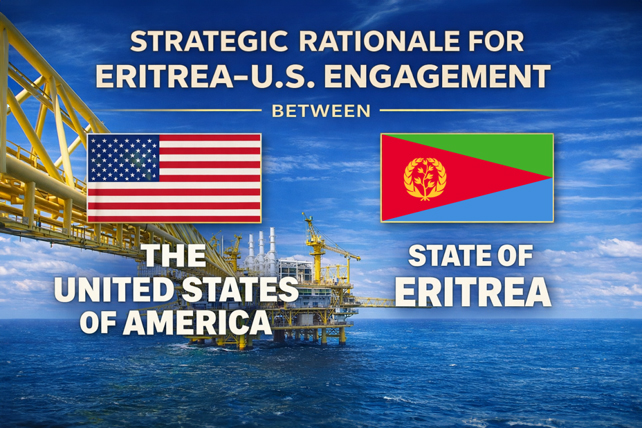
Strategic Rationale for Eritrea-U.S. Engagement (ጽምዶ)
By Alexander Tekie | CEO
Nakfa Energy LLC | Houston | 22 December 2025
National Interest Consideration
In Eritrea’s broader macroeconomic framework, the oil and gas sector is unequivocally a matter of national strategic interest. True self-reliance is achieved through production, not consumption.
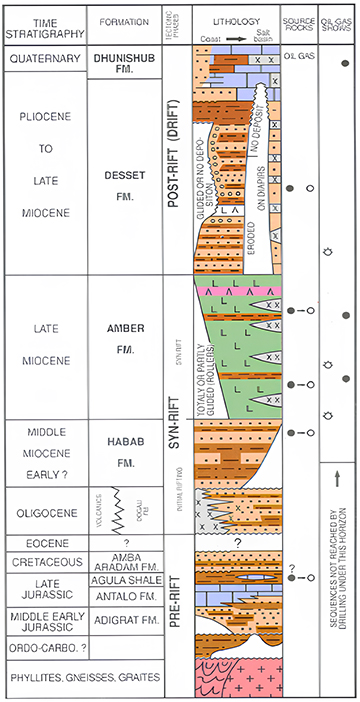
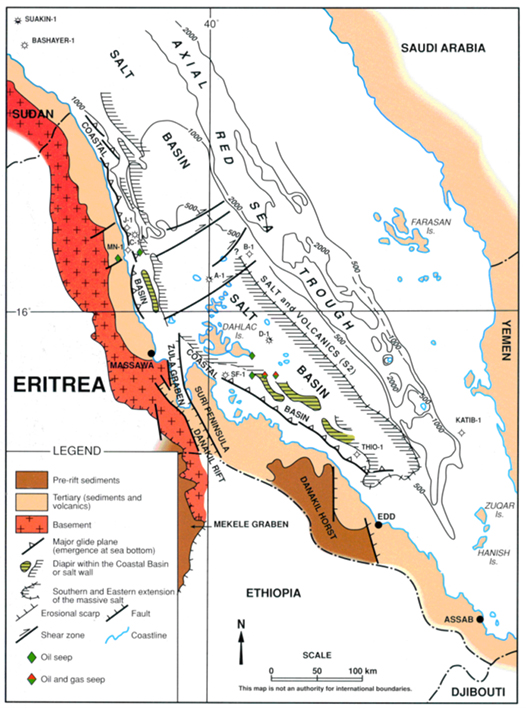
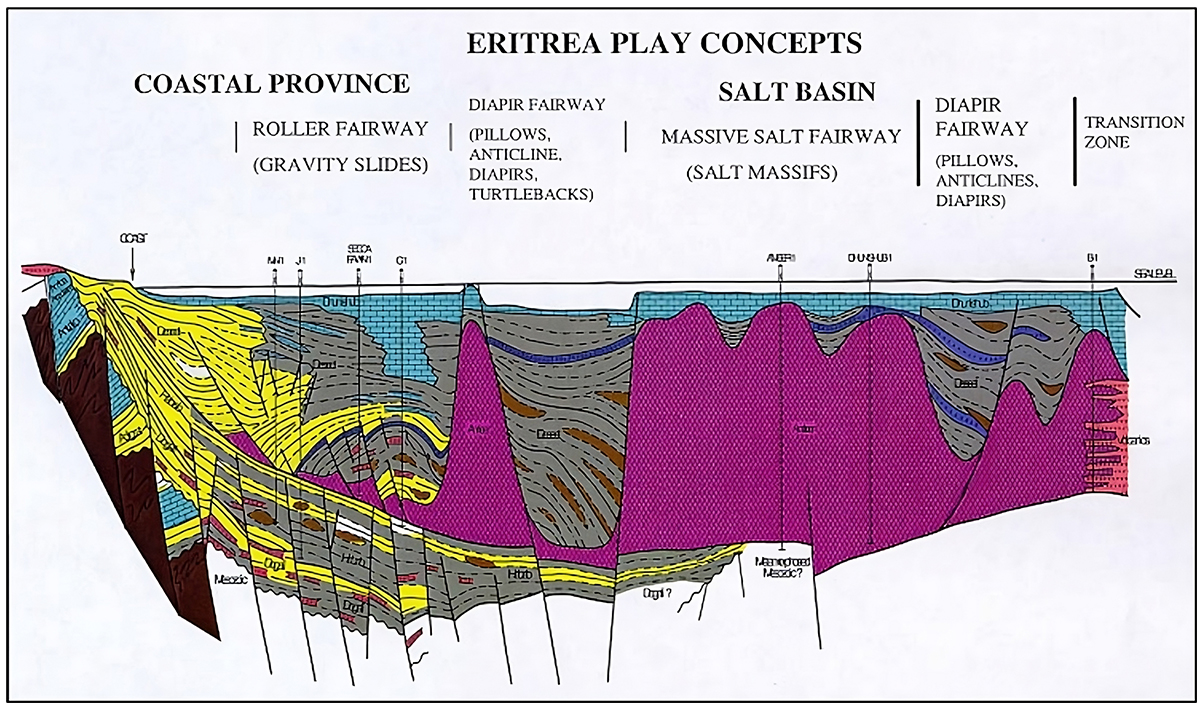
U.S. oil & gas companies’ entry into Eritrea should be deemed a matter of national interest, both geoeconomically and geopolitically. Partnering with US companies would not only unlock Eritrea’s offshore hydrocarbon potential but also enhance its international standing and attract major investment flows.
Thus, a pragmatic path forward is for Eritrea to engage the U.S. through “commercial diplomacy”, by proactively signaling its readiness for economic partnership and initiating structured discussions on oil and gas opportunities that allow U.S. firms to invest with confidence. In this context, commercial diplomacy becomes the practical bridge that aligns Eritrea’s national interests with U.S. strategic and commercial engagement.
Why is this a geopolitical and diplomatic advantage?
U.S. oil & gas companies’ global stature gives Eritrea a channel of soft power into Washington, especially under the Trump administration, which strongly supports U.S. oil & gas and mining investment abroad.
- The entries could serve as a stabilizing bridge in Eritrea–U.S. relations, prompting Washington to choose dialogue over confrontation and cooperation over isolation.
- The timing is opportune: energy diplomacy is once again central to U.S. engagement in Africa.
- Eritrea must act decisively to capitalize on this geopolitical window or risk missing a rare and valuable opportunity.
Catalyst for Wider Industry Participation
U.S. companies’ engagement would send a powerful market signal that Eritrea is open for business.
- Its presence would immediately attract interest from other International Oil Companies (IOCs) and National Oil Companies (NOCs) seeking follow-on opportunities.
- The resulting competition would maximize government value and accelerate the development of Eritrea’s hydrocarbon sector.
Commentary on China’s Approach
China’s quest for energy security continues to accelerate, driving its pursuit of overseas oil and gas assets. However, Chinese state-owned enterprises (CNOOC, CNPC, Sinopec) generally avoid high-risk exploration, preferring instead to enter after commercial discoveries have been proven by IOCs.
- Example 1: CNOOC’s farm-in with ExxonMobil in Guyana, acquiring a 25% working interest only after Exxon’s Liza discovery had established Guyana as a new oil province.
- Example 2: CNPC joined TotalEnergies in Uganda’s Lake Albert project post-discovery.
- Example 3: Sinopec entered Angola’s deepwater blocks following successful exploration by Western operators.
These patterns confirm that China prioritizes access to the commodity itself, the producing asset, rather than assuming the geological risk of frontier exploration.
For Eritrea, this presents a clear sequencing advantage: by engaging U.S. companies now to open and de-risk the basin, Eritrea will be in a position to invite Chinese participation later, on stronger commercial terms, ensuring maximum value and strategic leverage for the nation.
Ultimately, the state has a duty to prudently develop its natural resources for the long-term benefit of its people, and hydrocarbons, if confirmed, can play a transformative role in Eritrea’s economic self-sufficiency. To that end, commercial diplomacy serves as a catalyst for a strategic rationale for Eritrea-U.S. engagement. This is ጽምዶ in action.
About the Author
Alexander Tekie is the CEO of Nakfa Energy. In 2002, Alex established U.S. Eritrea Business Council and served as its Executive Director.
About Nakfa Energy
Nakfa is an independent oil & gas company focused on the exploration and development of Eritrea’s hydrocarbon potential. It is committed to unlocking Eritrea’s immense untapped energy endowment.
For further information, please contact: info@nakfaenergy.com